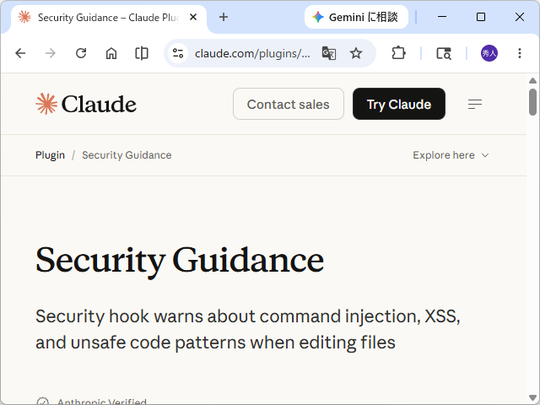
For Claude Code users, this is the kind of feature that moves the product from “smart coding assistant” toward something you might trust in a real workflow. Anthropic’s new security-guidance plugin is designed to catch vulnerabilities while you write, not after the fact, and that changes the shape of the conversation around AI coding tools.





security-guidance plugin for Claude Code./plugin install security-guidance@claude-plugins-official.


What strikes me is that this is not just “AI helping with security” in the vague marketing sense. The three-layer approach is pragmatic. The first layer is especially sensible: catching obviously dangerous patterns immediately, without burning tokens or waiting for a model pass, sounds like the kind of thing that should have existed from day one.


I also like the idea that the scan runs in a separate context window. That part matters more than it first sounds. If the same context that wrote the code is also judging it, you can end up with a very self-congratulatory system. A separate review pass is not a silver bullet, but it feels much closer to how a decent human code review actually works.




The 30% to 40% drop in security-related PR comments is promising, though I would not read that as “the plugin solved security.” It probably means it is catching a meaningful chunk of obvious mistakes before review, which is still useful. I’d be curious whether that improvement holds across different codebases, especially in older projects with messy architecture and lots of edge cases. That’s where these tools usually get humbler.

The extensibility angle is the part I would actually want to try. A built-in security assistant is nice, but real teams have their own rules, their own libraries, and their own recurring foot-guns. If Claude Code can let you layer in project-specific checks without turning the whole setup into a brittle policy engine, that could be genuinely useful.

At the same time, I think there is a temptation to oversell this kind of feature as if it meaningfully replaces a security review. It does not. It looks more like a strong guardrail, a fast first pass, and a way to stop embarrassingly avoidable mistakes from shipping. That is still valuable. Just not magical.


For Claude Code users, I would try this immediately if I were working on a web app, an internal tool, or anything with auth, user input, or DOM-heavy code. This is the sort of plugin that might quietly save you from a bad day.


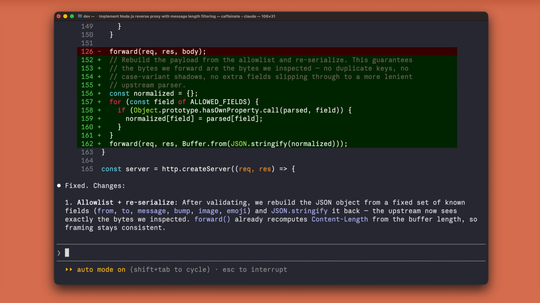
The bigger takeaway is simple: Anthropic is trying to make Claude Code feel less like a code generator and more like a coding environment with opinionated safety rails. That is a direction I find more interesting than yet another benchmark victory.






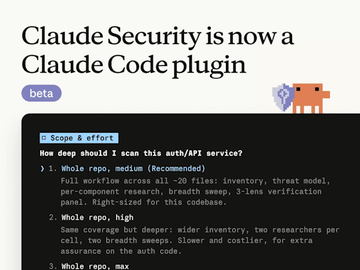

Reference: Anthropic、「Claude Code」向けにセキュリティ監査プラグインを無償提供/3つのレイヤーでコードベースからリアルタイムで脆弱性を検出・修正