For people building with Claude, this is a pretty important shift: it moves agentic browser automation from “the model can log in if you give it the password” to “the model can act with permission while never seeing the secret.” That sounds subtle, but it’s the difference between a demo-friendly trick and something I’d actually consider using for real accounts.

What makes this notable is less the marketing gloss and more the security boundary 1Password is trying to enforce. If Claude is going to click, buy, update, and submit on your behalf, then credential handling stops being a side issue and becomes the whole game.
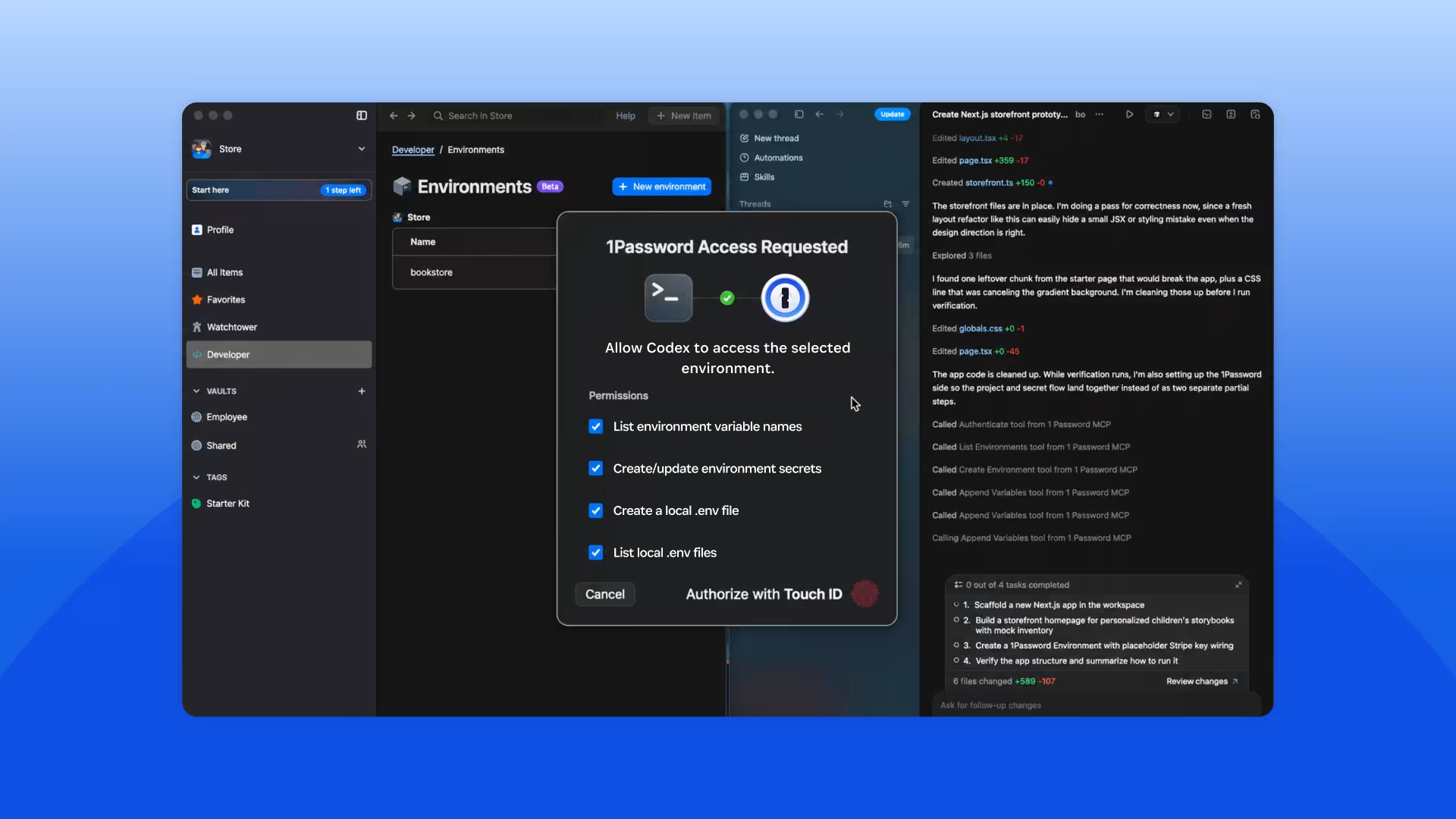
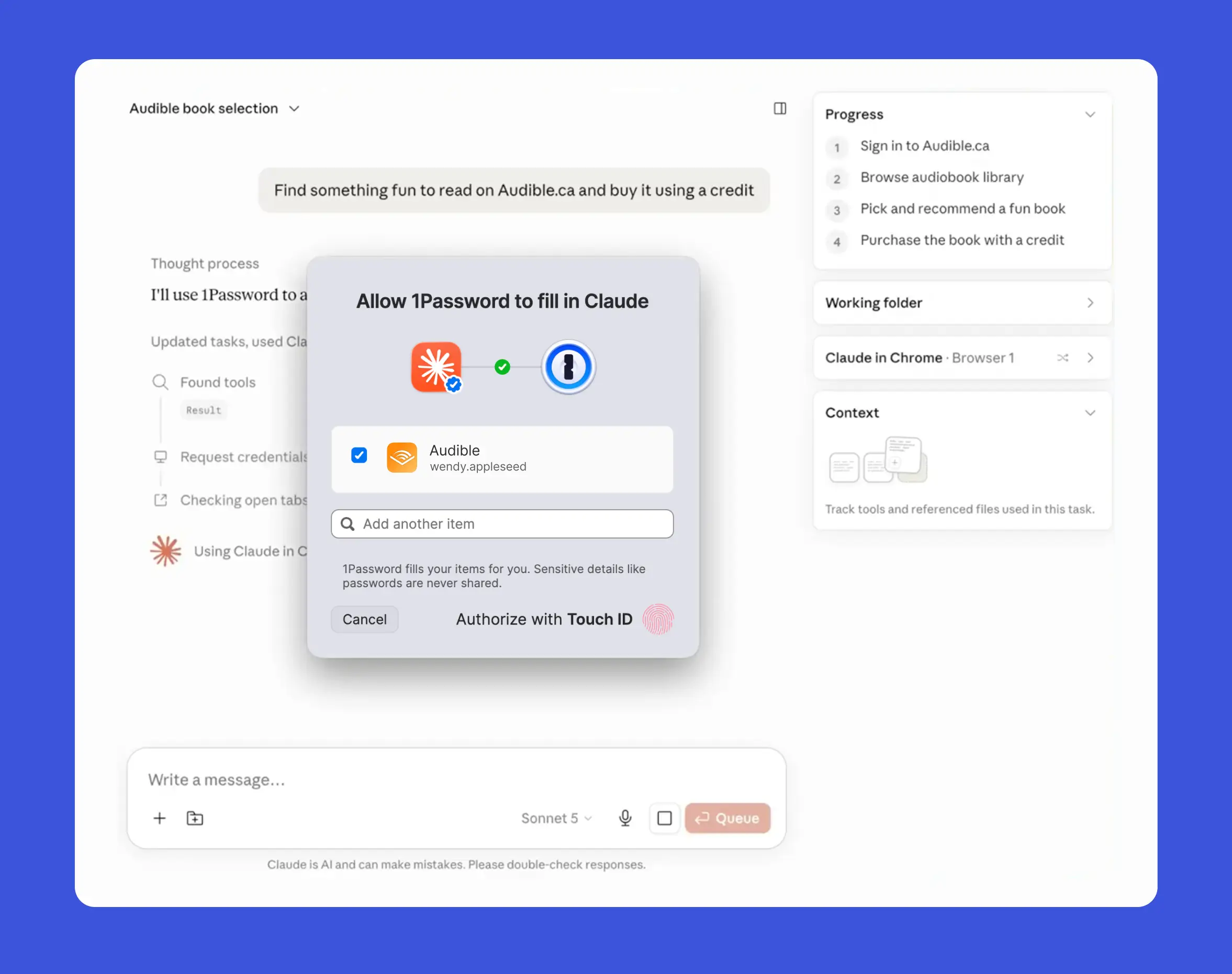

What strikes me is that 1Password is aiming at the exact part of agentic AI that most people hand-wave away. Everyone wants the agent to “just do it,” but the moment a login or MFA prompt appears, the security story falls apart. This setup is interesting because it keeps the credential out of the model context entirely. That’s the right instinct.


I also think the “runtime-only” framing matters more than it first sounds. If you’re a Claude user or building workflows around Claude Code, you already know the painful truth: a model that can reason about a task is not the same thing as a model you should trust with persistent secrets. 1Password is basically saying the agent can borrow access for this one move, not own the key. That feels sane.

The browser part is where I’d be most cautious. Agentic Mode sounds like a necessary guardrail, not a nice-to-have, because a browser-controlled agent can get weird fast if it can poke at extension UIs or wander outside the intended flow. I’d be curious whether the UX stays smooth enough that people don’t just bypass it out of annoyance. Security controls are easy to praise and hard to live with.


I’m mildly skeptical of the “works across the sites where Claude in Chrome can take action” line only because that’s the kind of claim that sounds universal until you hit a weird site, an unusual MFA flow, or a fragile checkout page. Still, the general pattern is compelling. If it really works as described, I’d absolutely try it for boring, high-friction tasks: account lookups, admin dashboards, maybe some vendor portals I dislike logging into manually.

For developers, the bigger signal is philosophical. 1Password is treating agents as a new identity class that needs governed access, not as just another UI trick. I think that’s the right direction. The overhyped version of agentic AI is “let it use your apps.” The useful version is “let it act, but keep the secret sealed.” This announcement is clearly aimed at the second one.

The takeaway is simple: this is less about Claude getting smarter and more about making Claude safer to delegate to. If agentic workflows are going to be more than a stunt, secret handling has to look a lot more like this.