From a Claude / Claude Code developer’s perspective, this is a nice example of the gap between “agent demo” and “agent I’d actually trust every day.” The post shows how routines can turn a useful prompt into a scheduled automation with very little infra overhead, while also surfacing the boring-but-real problems: fragile logins, connector limitations, false positives, and prompt drift.

email_me() MCP tool to Driggsby, restricted to the verified owner email and designed to avoid links and images; the body is Markdown-rendered for more consistent formatting.
What strikes me is how unglamorous and believable this is. This isn’t “AI will replace your finance stack”; it’s “I wanted a daily summary, got tired of flaky browser automation, and found a cleaner way to package the same job.” That’s exactly the kind of automation Claude Code routines seem suited for: narrow, repetitive, semi-structured work where the main value is reducing friction.
I think the most interesting part is not the finance use case itself, but the workflow shape. The author already had the hard part in place — reliable data access through Plaid and an MCP server — and routines became the thin orchestration layer on top. That feels like the real unlock: if your tools are exposed cleanly, you can prototype useful automations with almost no ceremony. For Claude users, that’s a compelling upgrade over writing yet another little agent runner.
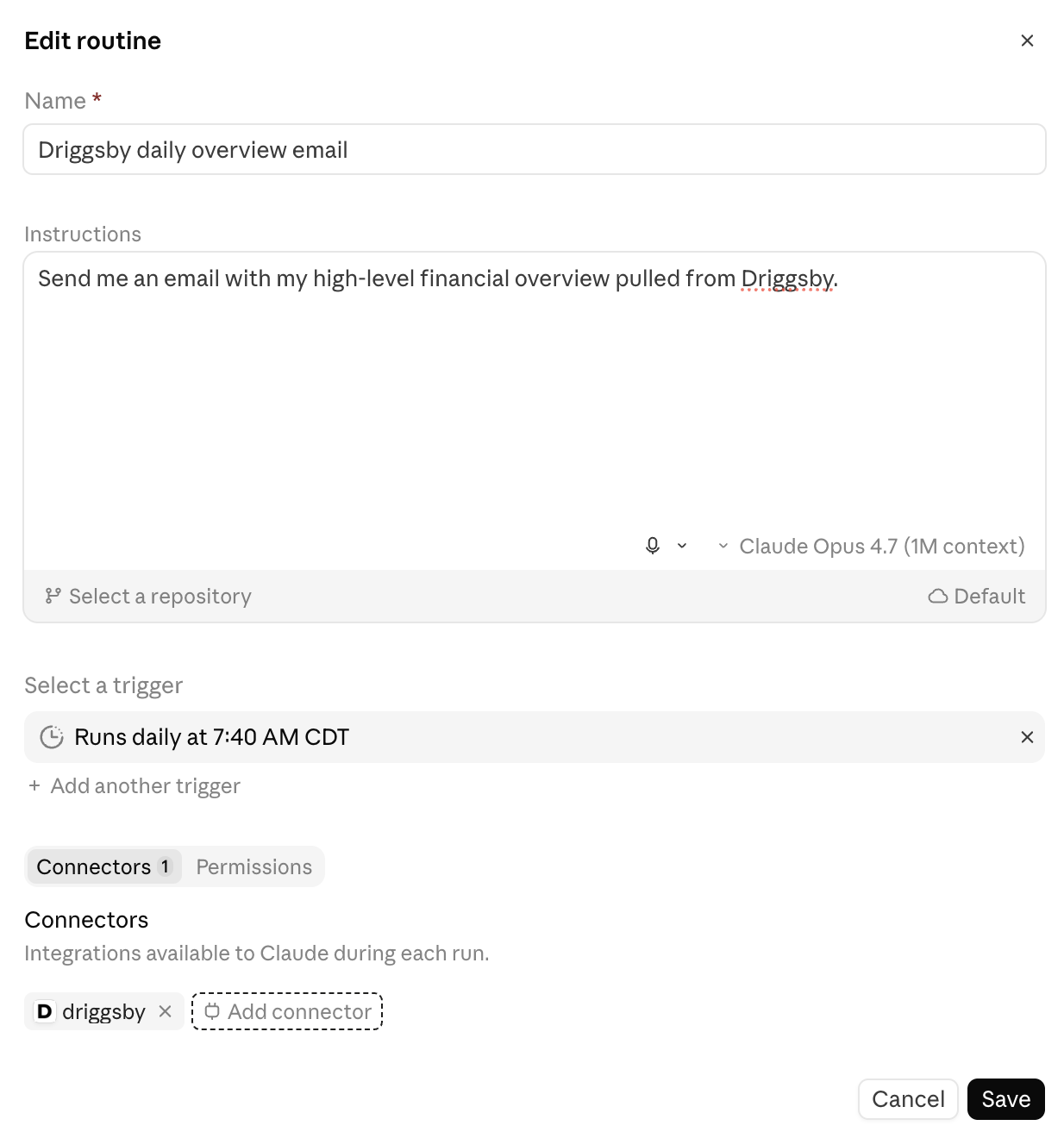
At the same time, this also shows the limits pretty clearly. The initial browser-based approach was brittle in exactly the ways I’d expect: 2FA, passkeys, UI changes, and model-generated formatting drift. So I’d be cautious about reading this as proof that agents can “handle anything.” They can handle a lot, but only when the surrounding interfaces are shaped to be machine-friendly.
I also appreciate the honesty about false positives. A prompt like “look for weird spending patterns” is useful, but it’s not magic. In practice, I’d expect a lot of tuning, and I’d want strong guardrails around what an alert is allowed to do. I’d be curious whether this ends up being more valuable as a review assistant than as a fully autonomous watchdog. My guess is the sweet spot is “detect and draft,” then let a human confirm.
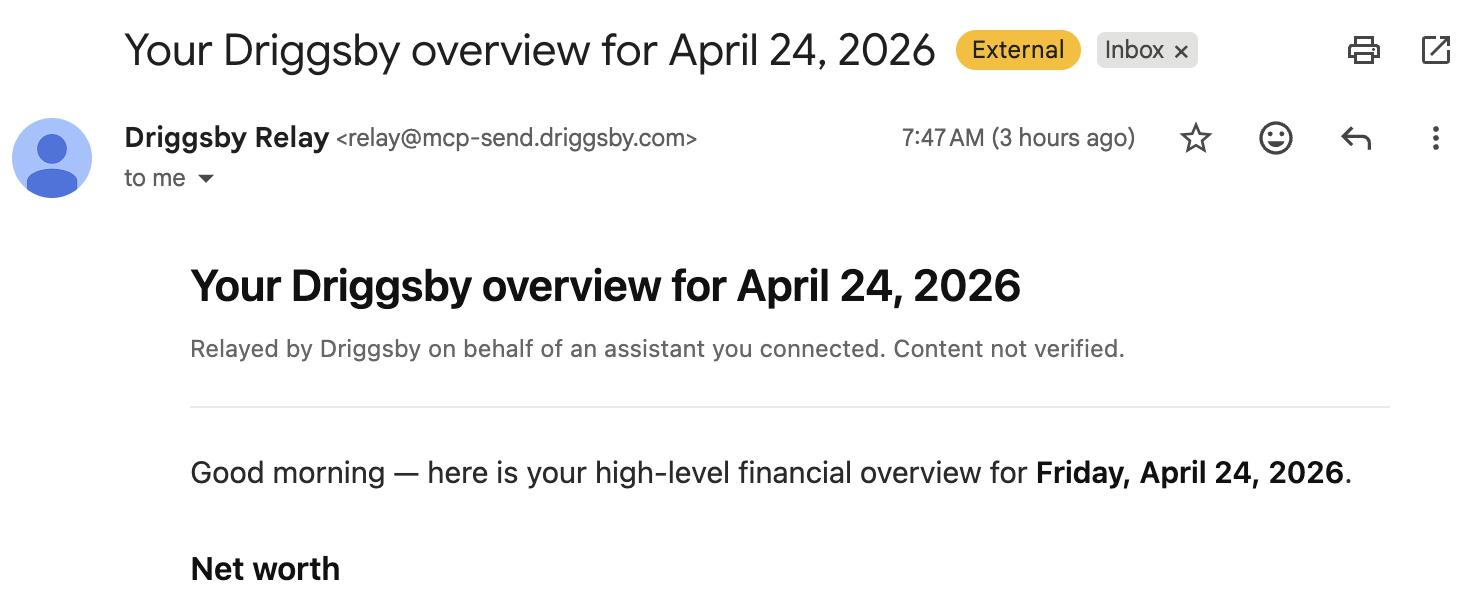
If I were building with Claude Code, this is the pattern I’d copy: expose clean tools via MCP, keep the routine scope narrow, make outputs inspectable, and use prompts as the first version of automation rather than the final one. That seems much more durable than trying to force a general agent loop to behave like production software from day one.
The takeaway is simple: routines make agentic automation feel lightweight enough to actually use. That’s exciting — not because it’s futuristic, but because it’s practical.
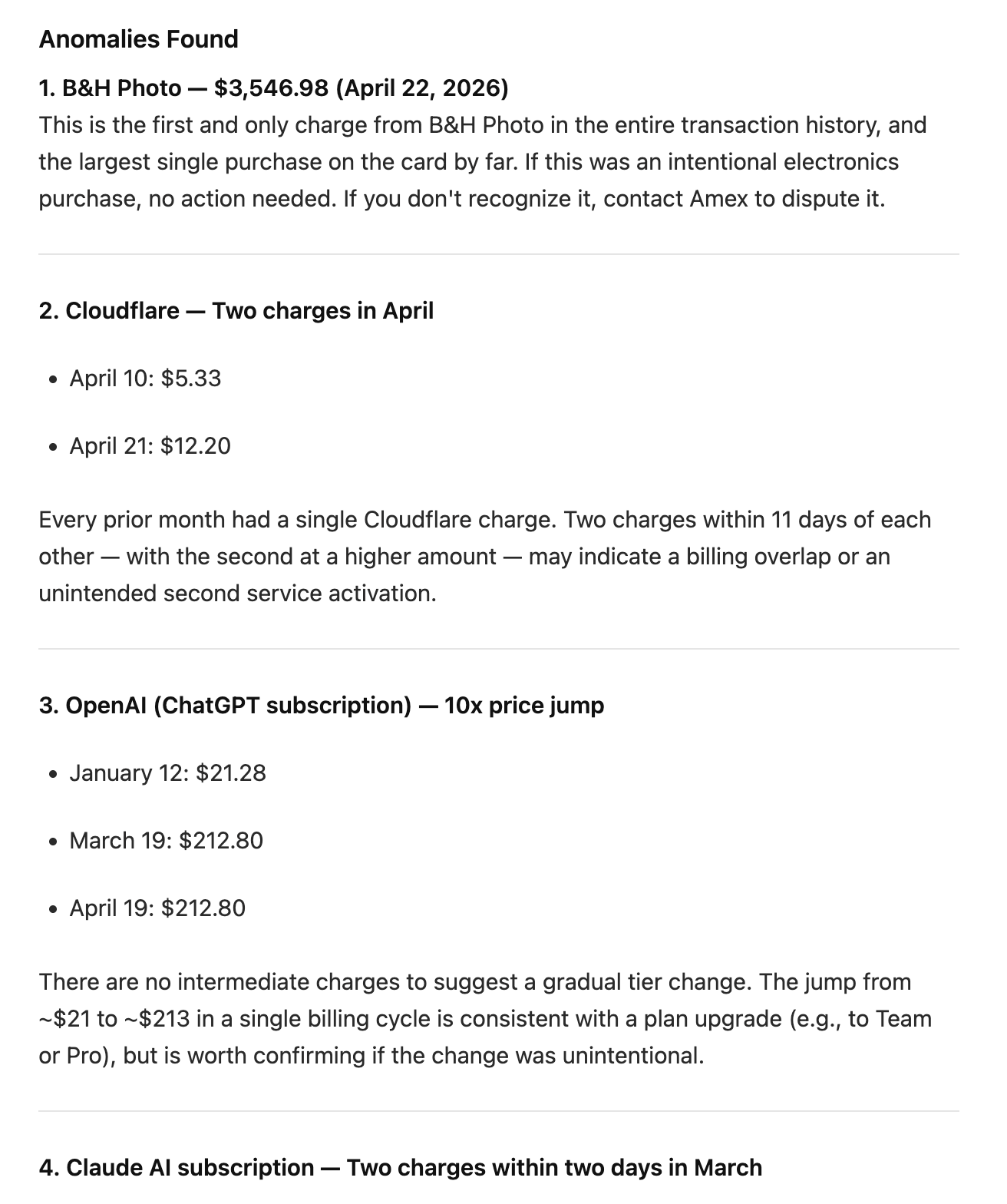
Reference: Could a Claude Code routine watch my finances? | Driggsby