Anthropic’s Managed Agents are still young, but this update is the kind of thing that makes the platform feel more like a serious agent runtime and less like a demo wrapper. For Claude and Claude Code developers, the interesting part isn’t just “more features” — it’s that Anthropic is starting to formalize the messy parts of agent work: memory, evaluation, and delegation.

What strikes me is that Anthropic is now tackling the three things that usually make agent systems brittle in practice: memory drift, weak evaluation, and “one giant agent doing everything” syndrome. That’s a pretty sensible roadmap, and honestly more useful than flashy agent demos that only work in idealized conditions.
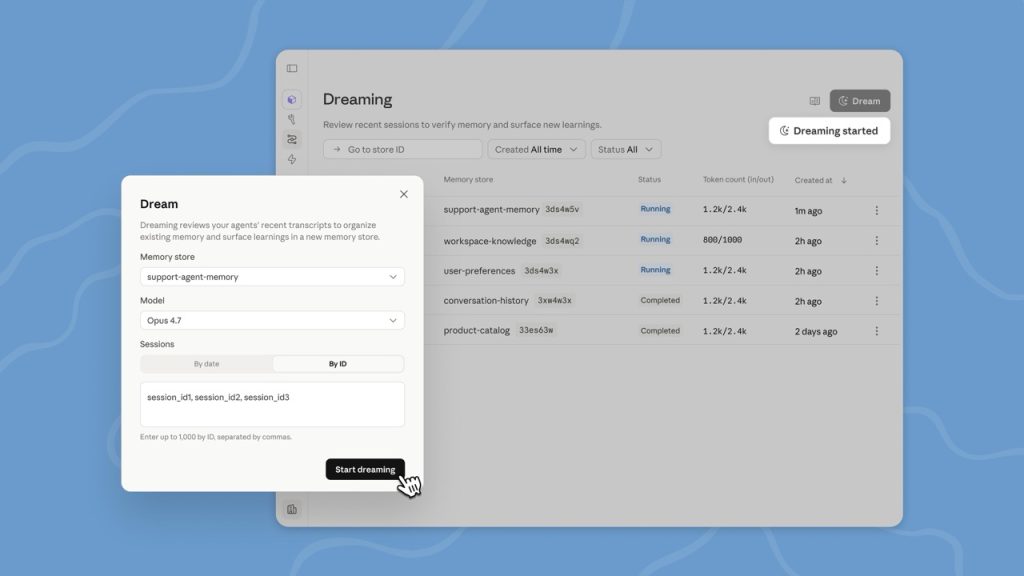
I think dreaming is the most intriguing piece, but also the one I’d approach with caution. The idea of periodically reviewing past sessions to extract patterns sounds genuinely useful for long-lived agents, yet it also raises the obvious question: how much automated memory refinement can you trust before it starts smoothing over important nuance? I’d be curious whether teams will leave this fully automatic or keep humans in the loop.
Outcomes feels especially practical. In agent development, the hard part is often not getting a response, but getting a response that actually meets a standard you care about. A separate grader in its own context window is a smart design choice, because it at least reduces the chance that the model grades itself too generously. That said, rubric design can become its own mini-discipline, and I suspect some teams will overestimate how “objective” their outcome definitions really are.

The multiagent orchestration angle is probably the most immediately compelling for real workloads. I think splitting investigation, retrieval, and synthesis across specialist agents makes sense, especially for debugging or operational workflows where parallelism matters. Still, multiagent systems can get expensive and cognitively messy fast, so I’d want to see whether the coordination overhead stays lower than the benefit.
If I were building with Claude, I’d probably try this in a narrow, high-signal workflow first: something like incident triage, support case analysis, or repo-to-ticket summarization. That would let me test whether memory, grading, and delegation actually improve reliability instead of just adding more moving parts.

The big takeaway is that Anthropic is making Claude Managed Agents feel more like an operational platform for serious agent work. That’s exciting — not because it solves agents, but because it’s moving closer to the boring, hard infrastructure real agent systems need.
Reference: Anthropic updates Claude Managed Agents with three new features - 9to5Mac