For Claude Code users, this is interesting because it tackles one of the messiest parts of agentic coding: where the agent actually runs. Instead of letting an AI scribble all over your laptop environment, devcontainer-mcp tries to put the agent inside a reproducible dev container and keep the host machine out of the blast radius.
That’s a very Claude-shaped idea, honestly. Claude Code is most useful when it can inspect, edit, run, and verify code with real tools — but the environment around those tools matters just as much as the model.

devcontainer-mcp is an MCP server meant to let AI coding agents work directly inside dev containers.devcontainer CLIgh CLIWhat strikes me is that this is not really “AI coding” hype in the abstract — it’s infrastructure glue, which is where a lot of the real value lives. If Claude Code is going to be genuinely useful in day-to-day development, I think the environment story matters almost as much as the reasoning model. A tool like this makes the agent less like a chat interface and more like a controlled worker with a proper sandbox.
I also like the fact that the project leans into existing standards and tools instead of inventing a whole new universe. MCP, devcontainer specs, DevPod, Codespaces, the gh CLI — that’s pragmatic. In practice, that usually beats a flashy “unified platform” pitch that turns out to be hard to trust.
The auth broker is probably the most important part conceptually. Letting an agent operate without raw tokens is the right instinct, and I think that’s the kind of detail that will matter to teams adopting Claude Code in serious repos. At the same time, I’d be curious whether the opaque-handle model stays simple enough in real-world use, especially when multiple providers and scopes are involved.
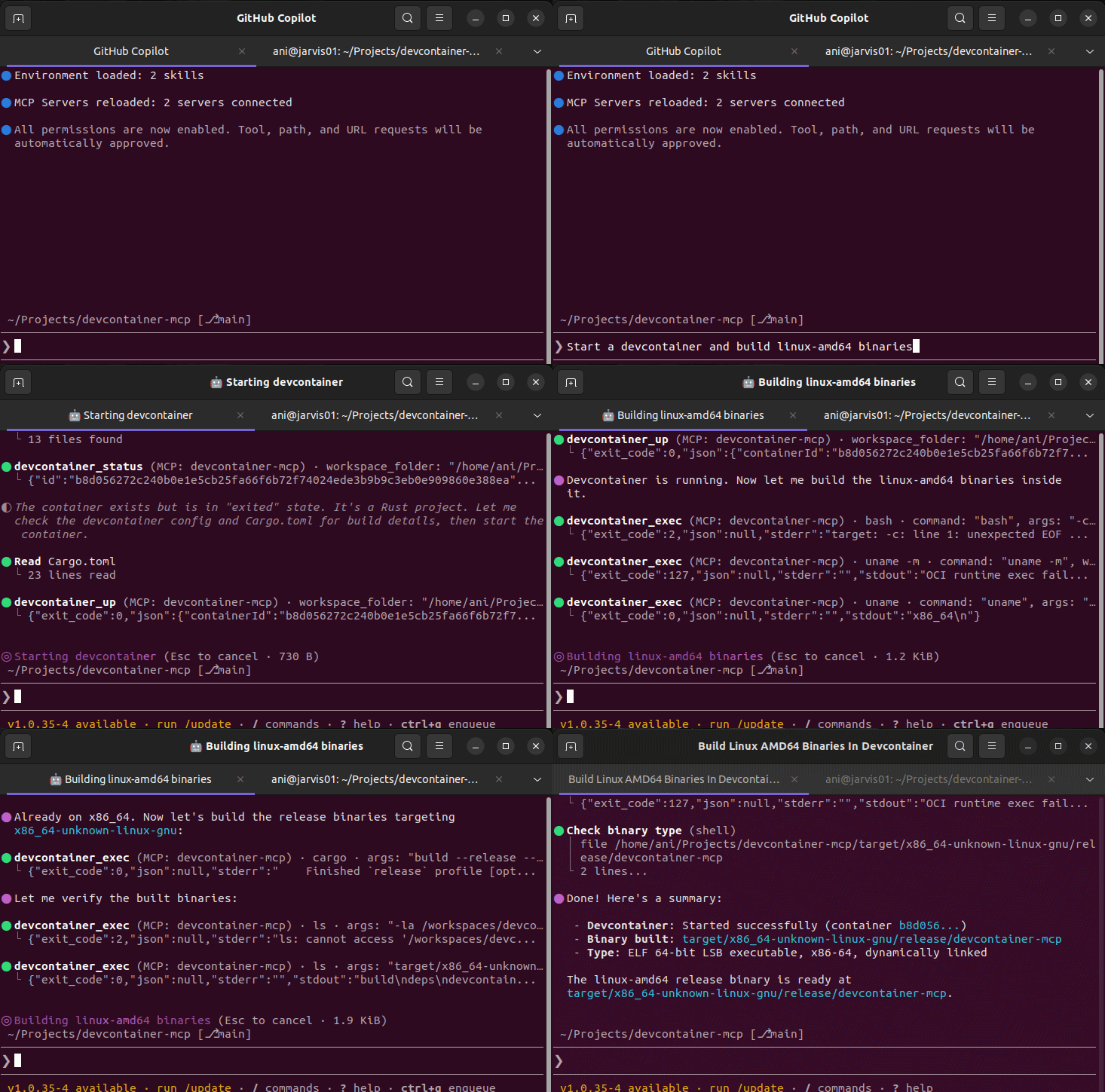
The biggest upside, to me, is operational hygiene. If I were using Claude Code on a project with a solid devcontainer already, I would absolutely want the agent to work inside that environment instead of improvising on my laptop. That feels safer, more reproducible, and more reviewable. The downside is that this still depends on your container setup being good — if your devcontainer is flaky or underdescribed, the AI will inherit those problems, not solve them.
I do think the “45 tools” angle could be double-edged. It’s powerful, but it also hints at a fairly large surface area to learn and maintain. Perhaps that’s fine for advanced users and teams; I just wouldn’t expect it to feel lightweight.
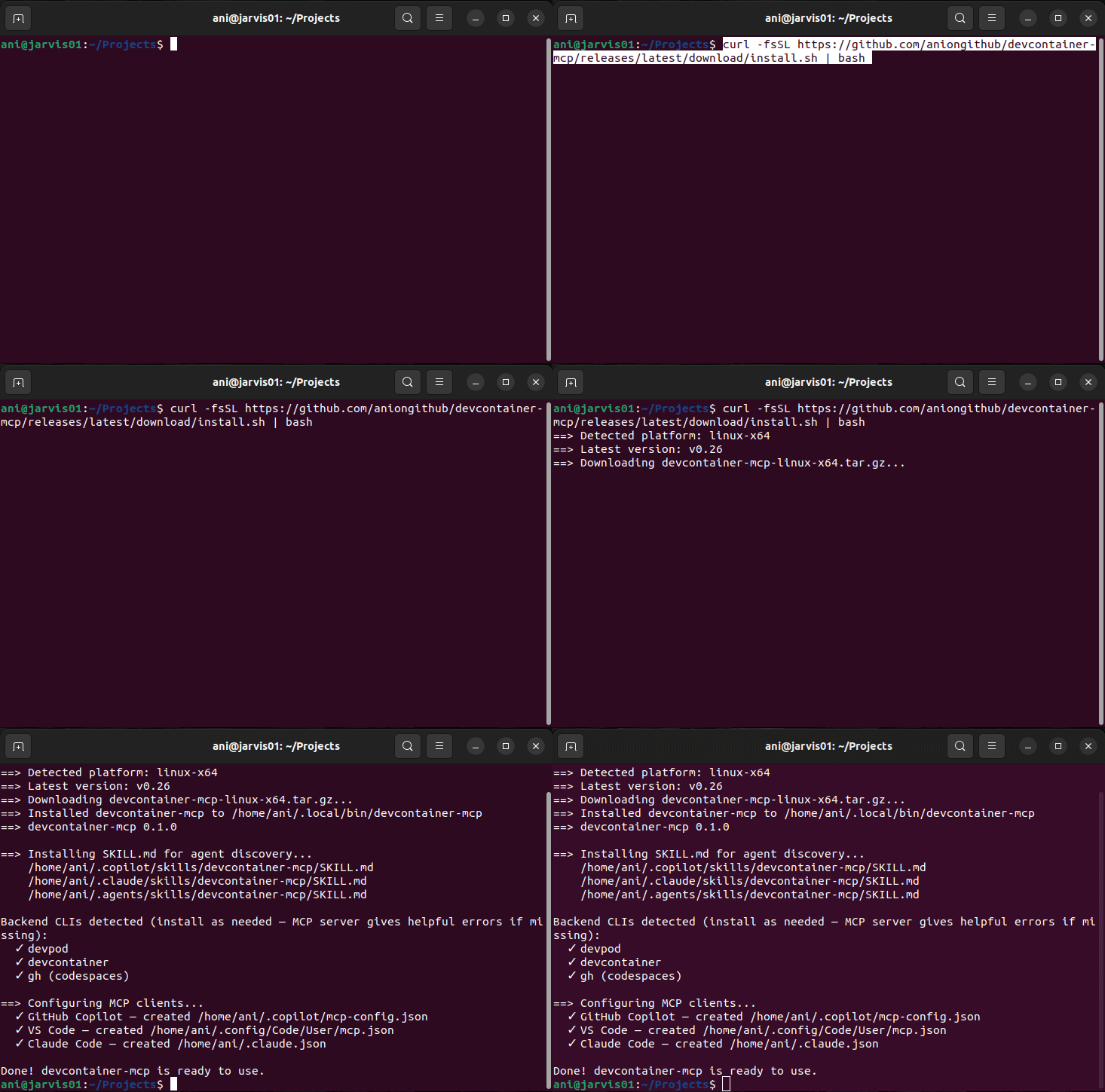
The takeaway is simple: this project is trying to make Claude Code and similar agents behave like disciplined contributors, not opportunistic shell gremlins. That’s a direction I find genuinely useful, not just impressive on a slide.