For Claude and Claude Code developers, this is a big deal because it tackles one of the least glamorous but most painful parts of real-world AI tooling: auth. If you’ve ever watched an enterprise deployment get bogged down by repeated consent prompts, inconsistent access rules, or awkward personal-vs-work account boundaries, this announcement is aimed straight at that mess.
What strikes me is that this is exactly the kind of infrastructure change that can quietly unlock much broader AI adoption than flashy model benchmarks ever will. For Claude Code especially, enterprise auth is not a side quest — it’s the difference between “cool demo” and “we can actually roll this out.”
I think the most compelling part is the shift from user-by-user consent to org-level policy. That sounds boring, but boring is what enterprises buy when they need consistency, audit trails, and fewer support tickets. If EMA really does what the post claims, it removes a lot of the accidental complexity that makes MCP setups feel fragile in larger organizations.
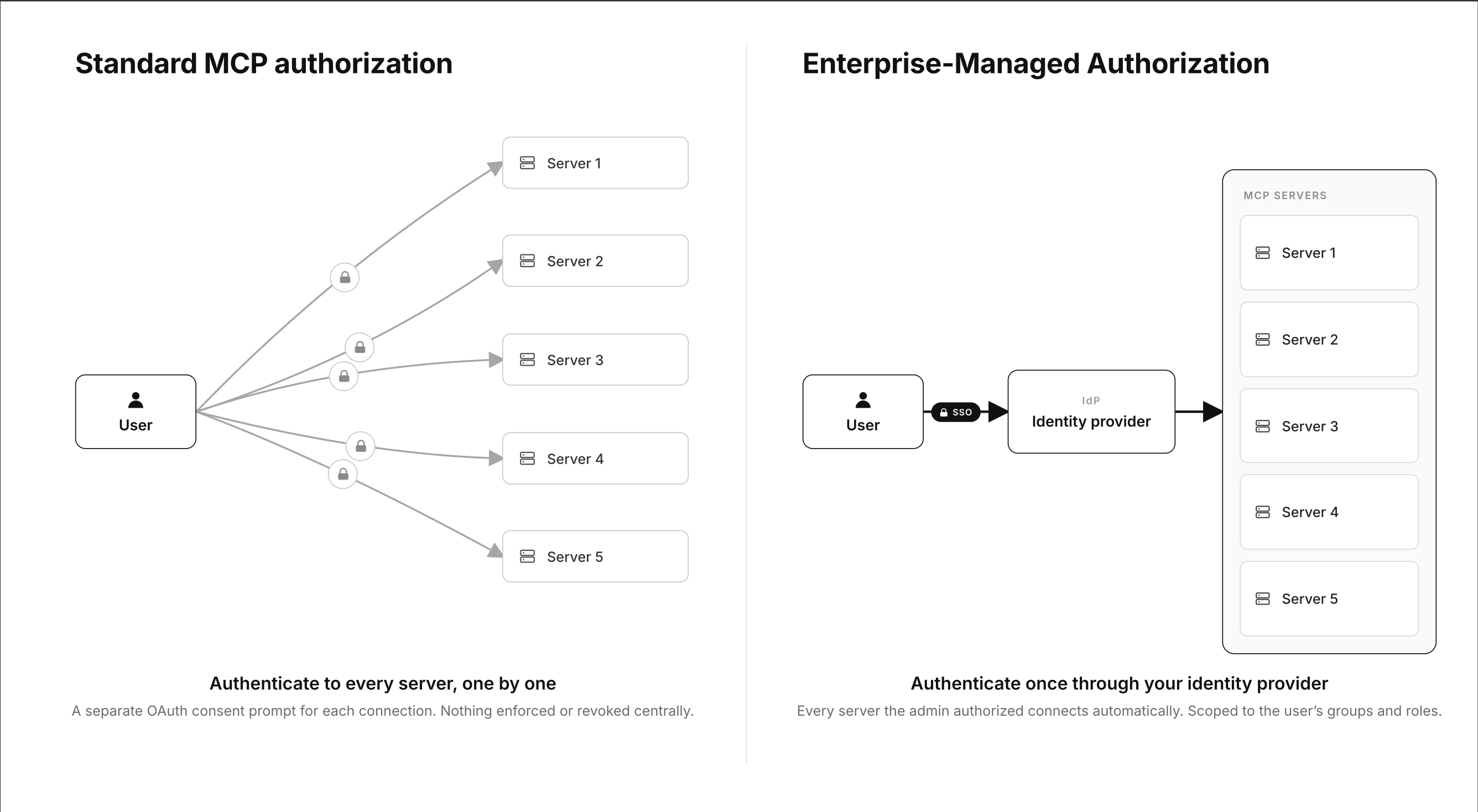
I’m also cautiously optimistic about the “zero-touch” promise. In theory, that’s great: log in once, get the right connectors, move on. In practice, I’d be curious whether this stays smooth across mixed client ecosystems, edge-case identity setups, and organizations with very strict conditional access rules. That’s where these things often get less magical.
What I’d actually do with this as a Claude Code user: I’d want my company’s admin team to enable the servers we trust once, then let me stop thinking about auth prompts entirely. That would make MCP feel much more like infrastructure and much less like a collection of one-off integrations.
The big takeaway is simple: MCP is moving from “developer-friendly” toward “enterprise-operational.” That’s a meaningful step, and honestly, one of the more important ones I’ve seen for the Claude ecosystem lately.
Reference: Enterprise-Managed Authorization: Zero-touch OAuth for MCP