WASM-4 is a small, open-source fantasy console built around WebAssembly. It exists to let people make compact games under a deliberately tight set of constraints, while keeping one unusual freedom: you can write the cartridge in any language that compiles to WebAssembly, not just a single built-in scripting language.
That combination makes it interesting to hobbyist game developers and creative coders who want a minimal target with clear limits. The official site and docs at wasm4.org, plus the source repository on GitHub, frame it as a web-first, low-level system rather than a general-purpose engine.
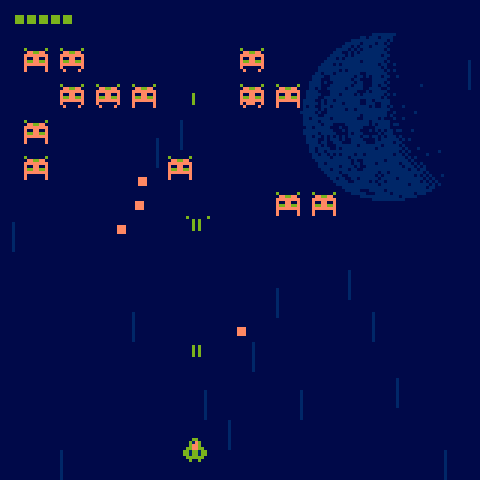
| Spec | Value |
|---|---|
| Display | 160×160 pixels |
| Palette | 4 colors, customizable |
| Update rate | 60 Hz |
| RAM | 64 KB linear RAM with memory-mapped I/O |
| Audio | 4 channels: 2 pulse-wave, 1 triangle-wave, 1 noise |
| Input | Keyboard, mouse, touchscreen, up to 4 gamepads |
| Cartridge format | WebAssembly .wasm file up to 64 KB |
| Supported languages | Any language that compiles to WebAssembly; officially supported out of the box: AssemblyScript, C/C++, Rust, Go, D, Nim, Odin, and Zig |
| Play modes | Browser; also via a libretro core |
| Creator | Bruno Garcia (aduros) |
| First released | 2021 |
If you are new to fantasy consoles, the mental model is straightforward: the machine is intentionally small, and the game must fit that machine rather than the other way around.

The official site and repository present WASM-4 as an environment for small games, not a full commercial engine. That matters because the tools are built around the console’s boundaries: a cartridge, a fixed display, a fixed color budget, and a simple input/audio model.
For many newcomers, that is a practical advantage. You spend less time configuring a large engine and more time solving a game-sized problem: rendering a small scene, reading input, producing sound, and fitting logic into a tiny memory footprint. The constraint set is also readable enough that you can understand the whole target without wading through a large API surface.
This short introduction walks through the basic idea of WASM-4 and is a useful companion to the official docs if you prefer a visual overview first.
Compared with fantasy consoles such as TIC-80, PixelVision8, and LIKO-12, WASM-4 sits at the minimal, low-level end of the spectrum. Many fantasy consoles provide built-in editors or a more opinionated built-in language experience. WASM-4 takes a different route: it narrows the hardware-style limits but leaves language choice unusually open. That means it can fit developers who already have a preferred compiler pipeline, or who want to experiment with a language that targets WebAssembly.
That difference affects the kind of project each system encourages. A more integrated fantasy console often invites you to stay inside its own ecosystem of code editor, art tools, audio tools, and scripting language. WASM-4 instead resembles a tiny deployment target. You still work within a fixed machine model, but your workflow begins in your own language and toolchain. For some makers that is liberating; for others it is less immediate than a console with a built-in editor.
The practical tradeoff is visible in the player and distribution story as well. WASM-4 games run in the browser and can also be used through a libretro core, so testing and sharing are straightforward. At the same time, the system’s low-level design means that people who want a more guided all-in-one creative suite may find TIC-80, PixelVision8, or LIKO-12 more immediate starting points. The best fit depends on whether you want a tiny machine to target, or a broader creative sandbox with more built-in conveniences.

WASM-4 also makes sense as a game-jam target because the boundaries are easy to explain. A cartridge is small, the palette is tiny, the audio system is limited, and the runtime is uniform. That gives participants a shared target that is expressive enough for many kinds of tiny games, while still keeping the scope under control.
The official community posts and jam-related material reinforce that identity. The platform is not trying to be a general engine replacement; it is trying to be a compact machine for making constrained games and sharing them easily.
Here is a community video showing jam results across different languages, which gives a sense of what people can fit into the system.
WASM-4 is significant because it treats WebAssembly not just as a delivery format, but as the basis for a fantasy console. That is a useful idea for hobbyists: instead of asking one language to fit every creator, it lets the console be the fixed part and the language be the flexible part. In practice, that lowers the barrier for people who already know C++, Rust, Go, Zig, or another WebAssembly-capable language and want a small, constrained target for game experiments.
It also points toward a broader pattern in creative coding: the value of a project is often in the limits it defines, not in the size of the feature list. WASM-4’s 4-color screen, 64 KB memory model, and compact cartridge size are not shortcomings to be “worked around”; they are the design language of the system. When a platform is this small, every decision becomes more visible—tile size, palette choice, input handling, sound usage, and how much state a game really needs.
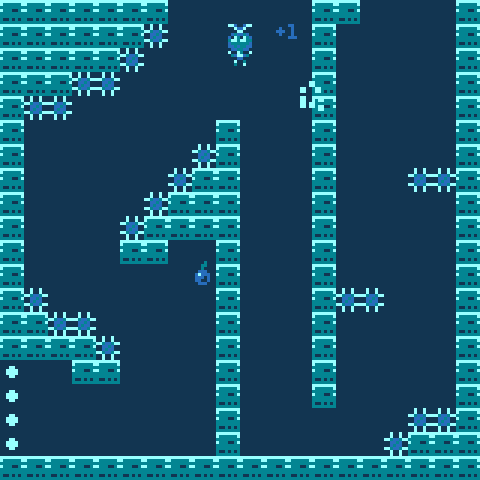
Another reason it matters is preservation and portability. Because the runtime is web-based and the cartridges are WebAssembly modules, the format aligns well with modern tooling and browser distribution. The official docs and libretro documentation show that WASM-4 is meant to be playable in more than one environment, which helps it function as both a learning platform and a shareable archive of small games.
For newcomers, that makes WASM-4 a good study in what fantasy consoles are for. They are not mini versions of mainstream engines. They are carefully bounded systems that make the constraints part of the creative process. WASM-4 is especially interesting because it combines that classic fantasy-console idea with a modern compilation target and a broad language story.
A second community video, announced by Context Free, is also useful if you want to see how the project was introduced around a jam context.
WASM-4 is a good fit if you:
It is less suited to people who want a large built-in asset pipeline, a fully integrated visual editor, or a broad general-purpose engine. The official documentation presents it as a minimal system, and that minimalism is central to how it should be evaluated.
The easiest first step is to read the official docs and then try the browser player. The docs explain the platform, its cartridge format, and the supported language options, while the play page shows you how the finished games behave in practice. If you prefer source-level study, the GitHub repository is the primary reference for implementation and project structure.
The full source lives on GitHub. The repository card below links straight to it:
(No confirmed official project X/Twitter or BlueSky account was found, so none is listed.)